Oxygenating pond plants: where to put them and how to look after them
This is an adapted article from our oxygenating pond plants guide on That Pond Guy.
Buying a few bunches of oxygenating plants sounds straightforward. Where it can go wrong is treating every plant in the same way. Some need somewhere to root, some attach to a stone, and others do not need compost at all.
We plant and maintain ponds as well as selling the plants. Before choosing a plant, we would look at where it will go, the light reaching it and whether fish are likely to disturb it. The pond’s volume alone tells us very little about those things.
Start with how the plant grows
Hornwort, Ceratophyllum demersum, is rootless. It can float freely or settle lower in the water. Weighted bunches help keep it in position, but there is no reason to bury those stems in a basket of compost.
Willow moss, Fontinalis antipyretica, has a different habit. It can attach to a stone or another suitable surface. The RHS describes it as an evergreen moss for clear, cool water, with a depth range of 10–90cm. Attachment is a different job from planting roots in soil.
Spiked water milfoil, Myriophyllum spicatum, can root into suitable substrate. Our product page lists weighted bunches and a deep-water pot option. Read the directions for the form you receive: a bunch and an established pot need different handling.
Check the position, not just the pond’s depth
The middle of the pond might be a metre deep, while a shelf around the edge is much shallower. Measure the position you intend to use and check how much light reaches the foliage there. A sunny pond can still be quite shaded underwater once lilies and other plants spread across its surface.
The RHS describes hornwort as able to grow in water up to 150cm deep. That does not mean the darkest, deepest corner is the best place for a new bunch. Clear water and enough light still matter.
For rooted pots, check how the supplier measures planting depth. It commonly means the water above the crown or basket surface. If a shelf is 40cm below the water and the crown sits 15cm above the shelf, there is about 25cm of water above the crown. Loose hornwort has no planted crown, so that calculation does not apply to it.
Does it need a basket?
Rooted plants may benefit from a basket that keeps their planting material contained and makes their position manageable. Use the material recommended for that species. Avoid rich multipurpose compost or loose fertiliser falling into the water.
Set the basket securely and leave room to reach it later. Our aquatic baskets and planting supplies are useful for rooted planting; a bigger basket will not help a rootless plant simply because it is sold as an oxygenator.
How many bunches should you buy?
Look at the space available for submerged growth and the size of the bunches being sold. Ten small bunches are not the same amount of planting as ten large ones. Existing lilies, shelves and maintenance access all take up space too.
As a general reference, the RHS suggests four to five bunches per square metre, with each bunch containing three to four stems. A rectangular pond 3m by 2m has a surface area of 6m². For that full area, the reference gives 24–30 bunches of that size. Compare the actual nursery pack and its directions before ordering, and reduce the planting area to account for what is already there.
This helps plan an initial order. It is not a calculation of how much oxygen your fish will receive. We would rather leave room to observe new growth than introduce a dense mass that is difficult to reach and thin.
Introduce plants carefully
Mid-spring to early summer is a useful starting point as the water warms. Outside the growing season, check the plant’s seasonal behaviour and the nursery’s current availability.
Open plants when they arrive, keep them wet and read their labels. Check between the stems for unwanted weeds or other hitchhikers. The RHS recommends keeping new purchases separate for a few weeks, in suitable conditions, to check for unwanted plant contaminants. A quick rinse can miss small fragments.
Use the full botanical name when comparing plants. Spiked water milfoil is different from parrot’s feather, Myriophyllum aquaticum. Similar common names can cause confusion. Check the government’s invasive plant rules for England and Wales where relevant, and never release pond plants or fragments into natural waterways.
Leave room to look after the pond
Healthy growth can become too dense. Keep pump intakes, drains and inspection areas accessible, and thin manageable sections rather than stripping the whole pond at once. Check lifted material carefully for wildlife and return animals safely to the water. Keep suitable surplus contained and away from streams and drains.
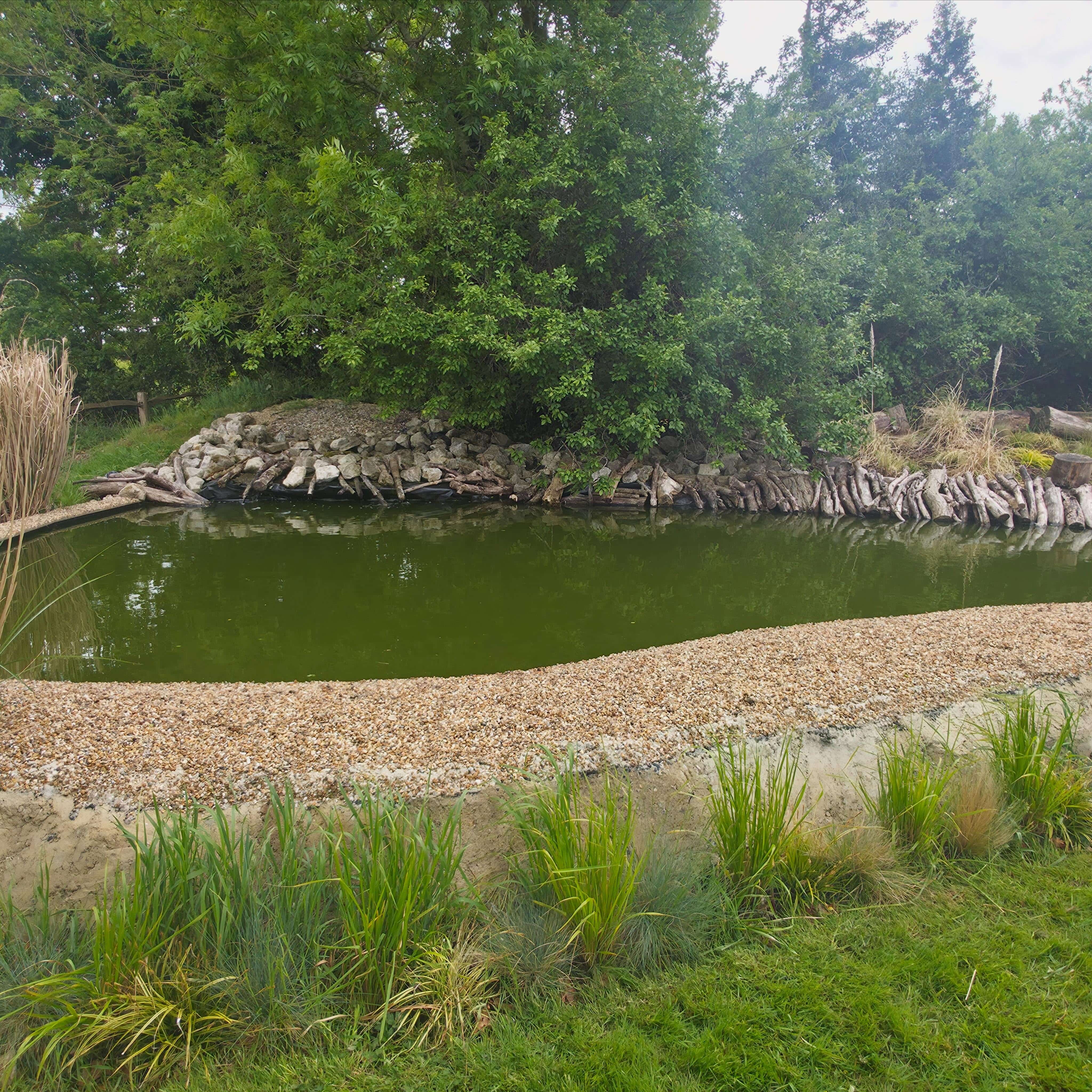
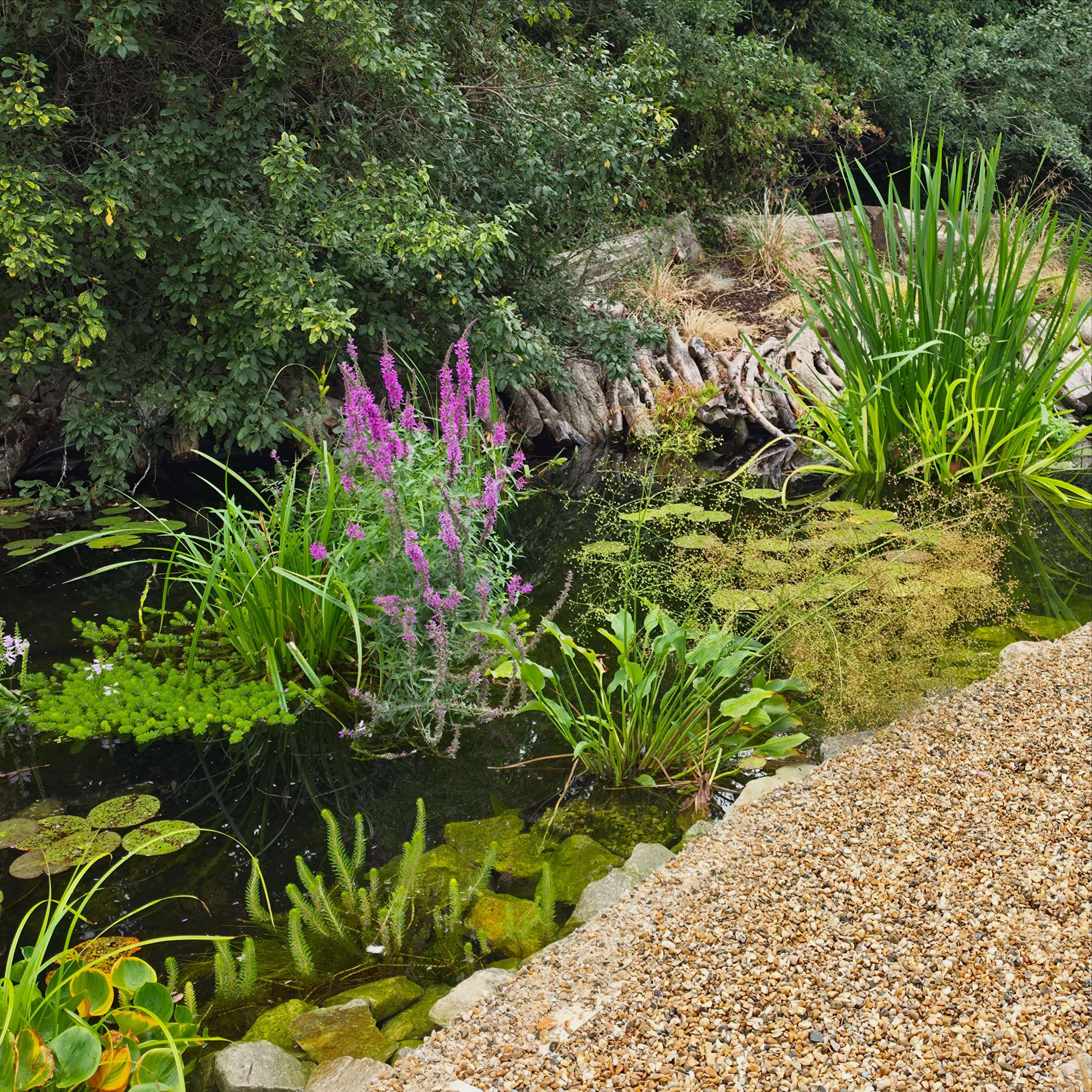
A planting scheme usually includes more than submerged plants. Our water lily care guide explains their different requirements and how their spread affects the space and light available.
Expect seasonal changes
Hornwort can lose much of its visible growth in winter and form compact resting buds, called turions. Less foliage does not automatically mean the plant is dead. Willow moss is evergreen, while spiked water milfoil is deciduous. All are affected by shorter days and changing conditions.
Remove genuinely decaying surplus and fallen leaves without throwing away every resting fragment. If growth is weak in summer, check light, shading and disturbance before assuming it needs more compost.
A note for ponds with fish
Submerged plants produce oxygen during photosynthesis in daylight, but they also consume oxygen through respiration. At night photosynthesis stops while respiration continues. The US Geological Survey explains that daily cycle.
Plants provide useful habitat and planting, but they cannot replace suitable filtration and aeration for a stocked fish pond. Large koi can also pull apart or eat new growth. A protected shelf or separate planted area may be more practical than placing delicate plants in their main swimming space.
Our full oxygenating plants guide covers these choices, planting examples, thinning, winter care and common problems. You can also browse our oxygenating pond plant range and check each species’ supplied form and current availability.


Comments
Post a Comment