Choosing Koi Food: Ingredients, Seasons and Feeding Portions
Originally published on That Pond Guy: choosing koi food for your pond. We keep koi ourselves and sell pond food, so we have put together this practical explanation of the differences worth checking before buying another bag.
There is more to a food than the protein percentage
A row of koi food bags can make a straightforward purchase surprisingly difficult. Growth, wheatgerm, colour, health, probiotic and all season all describe something about a food, but none tells you everything you need to know.
Start with your fish, the water temperature and what you want from the food. A complete daily diet for a mixed garden pond is a different purchase from a warm-water growth food for young koi. The highest protein figure is not automatically the most suitable choice.
Before comparing prices, check four things: whether it is a complete feed, its temperature directions, its pellet size and its intended use. That makes a shortlist much more useful than trying to rank every brand from best to worst.
What Matt feeds his own koi
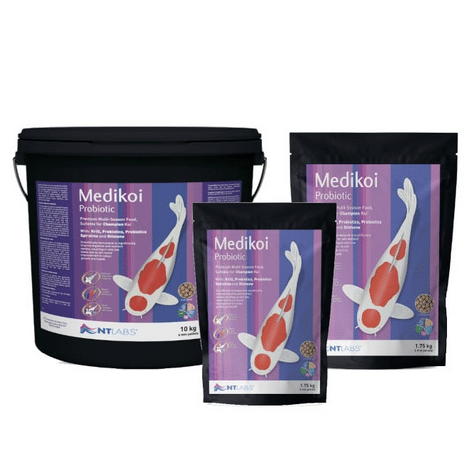
“I've fed my fish NT Labs food for years. I use Probiotic Wheatgerm with Garlic in winter, Probiotic Multi-Season in spring and autumn, and Probiotic Growth in summer.
“I'm not saying it's the best food, or that there aren't better foods out there. It's the range I chose a number of years ago and have stuck with. That's my own feeding routine, rather than a claim that everyone needs to buy the same thing.”
That is Matt's personal experience, rather than a reason for every pond owner to copy the same shopping list. The thermometer still matters. A heated pond and an unheated pond can need different feeding decisions on the same day, and buying a winter food is not an instruction to feed dormant fish.
Read the ingredients as well as the front of the bag
The composition is the ingredient list. The analytical constituents give figures such as protein, fat, fibre and ash. Those are useful, but they cannot tell the whole story about digestibility or whether a recipe suits the fish and conditions you have.
Keep the wording that accompanies those figures. A declared minimum is not the same kind of figure as a typical analysis. And ash means the mineral residue measured during analysis; it does not mean fireplace ash has been added to the pellets.
People also ask about fishmeal, poultry and insect ingredients. These are useful preferences to discuss, but the complete recipe matters. A food can contain more than one of those sources. “Insect-based” does not automatically mean fishmeal-free, and “wheatgerm” does not mean poultry-free.
For example, NT Labs' published Probiotic Wheatgerm with Garlic composition includes poultry ingredients. We would not describe Matt's colder-season food as poultry-free. Check the exact current declaration, rather than assuming every food within one brand uses the same recipe. Our full buying guide goes into the ingredient comparisons and links to the manufacturers' information.
JPD, Burtons, Evolution Aqua and the other ranges
We stock several brands because ponds and preferences differ. Within JPD, Shogun All Season and Shori High Growth are worth comparing for different purposes. Fujizakura Health, Medicarp, Medicarp Colour and Yamato Nishiki provide further choices. A health-labelled food remains food; it does not replace finding out why a fish is unwell.
Burtons offers floating and sinking options, including separate Growth and Growth Sinking foods, alongside Health, Wheatgerm and Winter Sinking. If you use sinking pellets, make sure you can see where they land and whether they are being eaten. It is easy to miss uneaten food once it has gone out of sight.
Evolution Aqua Premier and Growth Plus are different formulas. Check the feeding temperature as well as the analysis: the manufacturer's current instructions specify water above 18°C for both. A brand name alone is not enough to decide what to feed in spring or autumn.
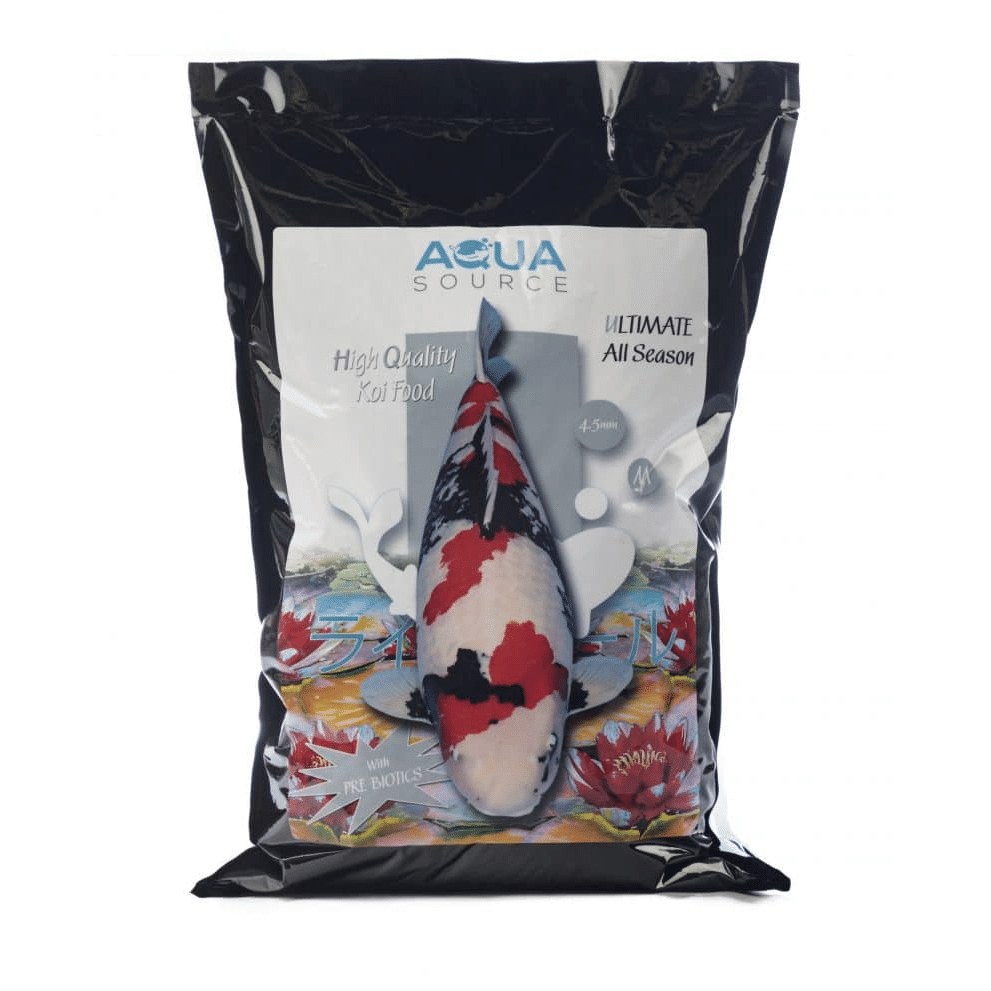
Hikari, Takazumi, Aqua Source, KiGen and FishScience are other ranges we discuss in the original article. Compare the exact food and pack you are buying. Different countries, pellet choices and formulas can have different directions, so the supplied pack remains important.
Use the pond temperature, rather than the calendar
An all-season label does not mean a food is appropriate at every temperature. Check its actual lower limit and watch whether your fish are feeding. Spring and autumn can be particularly changeable; a warm afternoon does not tell you what the pond has been doing overnight.
Keep a short note of the water temperature, the food and appetite. That is much more useful than switching to a growth formula because a particular month has arrived. Our winter feeding guide explains the colder-water decisions in more detail.
Automatic feeders divide the daily amount
Matt's own pond has substantial filtration and biological media. His automatic feeder gives six feeds a day, three hours apart, and he sometimes feeds by hand as well. That describes his pond; it is not a six-feeds-a-day rule for every system.
The daily amount still needs to suit the fish, water conditions and filter. Count the handfuls you give yourself as part of it. Adding a feeder should not mean the automatic portion and the hand-fed portion quietly become two separate daily rations.
Matt's practical check is that the fish finish the food within five minutes. Follow a shorter limit if the food's directions specify one. Food still left after that is too much, and it is wasted money as well as material the pond has to deal with. Sinking food needs watching too.
Calibrate a feeder with the pellets you actually use. A setting that dispenses a particular amount of one pellet may deliver a different amount of another. Recheck after changing food, and do not make an untested change immediately before going away.
Buy an amount you can keep fresh
Price per kilogram helps when the foods and pack sizes are genuinely comparable. It is less helpful if a large bargain bag takes so long to finish that storage becomes a problem. Check the best-before date, the maker's storage instructions and how well the packaging reseals.
Keep the original label so you can identify the recipe and batch if needed. If you transfer pellets into another container, retain those details rather than ending up with an anonymous tub of food.
There does not need to be a dramatic change if your koi take their current food well and it suits the pond. Make any change for a clear reason. For the detailed product comparisons, ingredient sources, pellet advice and manufacturer links, read our complete koi food buying guide.


Comments
Post a Comment