Ultimate Seasonal Pond Care Guide: Year-Round Tips for Healthy Ponds
Owning a pond is one of the most rewarding ways to connect with nature, whether you have a wildlife sanctuary, koi pond, or simple water garden. However, keeping your pond healthy requires more than just regular cleaning—it involves understanding seasonal pond care. Each season presents its own set of challenges, from rising temperatures in summer to freezing waters in winter. By mastering seasonal pond care, you can ensure your pond remains vibrant, healthy, and beautiful throughout the year.
Whether you're a new pond owner or have years of experience, understanding how to care for your pond through spring, summer, autumn, and winter is the key to maintaining a thriving aquatic ecosystem. In this guide, we’ll provide you with expert advice on how to handle seasonal pond care, covering everything from springtime cleaning to winter protection. Follow these tips to ensure your pond is always at its best, no matter the season.
General Pond Care Tips for Every Season
While pond care varies by season, certain tasks are universal throughout the year. Maintaining a solid routine for these tasks is crucial for long-term success.
Water Quality Monitoring
The backbone of successful seasonal pond care is keeping your water clean and balanced. Testing for pH, ammonia, nitrites, and nitrates should be done at least every two weeks. Unbalanced water can lead to stressed fish and plant health issues. Rapid changes in temperature, rainfall, or sunlight can cause water imbalances, so be vigilant in testing during seasonal transitions.
Debris Removal
Regardless of the season, debris such as leaves, twigs, and waste can build up in your pond. Removing these regularly with a pond net will prevent them from decomposing and affecting water quality. In autumn, when leaves fall in greater numbers, consider using a net over your pond to catch debris before it hits the water.
Inspect Equipment Regularly
Your pond equipment—pumps, filters, and UV clarifiers—are vital for keeping the water clean and oxygenated. As part of year-round seasonal pond care, check your equipment monthly to ensure it’s running smoothly. A malfunctioning pump can lead to stagnation, while clogged filters can result in poor water quality. Cleaning and replacing parts regularly will keep things working efficiently.
Cleaning Routine
Deep cleaning is necessary. Most ponds benefit from a full clean once or twice a year. Between these deep cleans, focus on lighter tasks such as skimming debris and maintaining water quality.
Spring Pond Care: Awakening the Pond After Winter
[caption id="attachment_3407" align="aligncenter" width="400"] Spring Pond Care[/caption]
Spring is the season when your pond starts to wake up after a long winter. Proper care during this time sets the stage for a healthy pond year-round.
Spring Cleaning
As part of your seasonal pond care routine, begin by thoroughly cleaning your pond. Remove any netting you placed to keep out autumn leaves and winter debris. Use a pond vacuum or net to clear away sludge, dead plant material, and any organic matter that accumulated over the winter months. This is crucial because decaying organic matter can cause a surge in nutrient levels, leading to unwanted algae blooms.
Reintroducing Fish and Plants
As the water temperature rises, your fish will begin to emerge from their dormant state. If you housed them indoors during the winter, gradually reintroduce them to the pond to avoid shocking their systems. Start feeding them lightly as their metabolism will be slow. You should also check on your aquatic plants—trim away dead growth, repot any that have outgrown their containers, and consider adding new plants to help oxygenate the water and control algae. The Royal Horticultural Society has alot of inmation about selecting the best aquatic plants for spring planting.
Water Testing and Equipment Checks
Spring is a great time to test your water quality and inspect your pond equipment. Check pH, ammonia, nitrite, and nitrate levels to ensure your water is balanced. It’s also essential to check your pumps, filters, and UV clarifiers for damage after the winter freeze. Ensure your filtration system is working efficiently to keep the water clear and oxygenated as the weather warms.
Summer Pond Care: Battling Heat and Algae
[caption id="attachment_3409" align="aligncenter" width="400"] Summer Pond Care[/caption]
Summer is the most active time for your pond, with fish and plants thriving in the warmer weather. However, the heat can cause issues like algae blooms, water evaporation, and oxygen depletion.
Algae Control and Filtration
One of the biggest challenges during summer seasonal pond care is managing algae. Algae thrive in warm, sunny conditions, and without intervention, they can quickly take over your pond, turning the water green. To prevent algae growth, ensure your filters are cleaned regularly, and consider installing or maintaining a UV clarifier to help control algae naturally. This guide will help you identify blanketweed and how to keep on top of it.
Maintain Oxygen Levels
Warm water holds less oxygen, which can be dangerous for fish, especially during hot spells. Installing an aerator or water feature, such as a fountain or waterfall, can help improve oxygenation. These features also add aesthetic value to your pond, enhancing the overall environment. Be sure to monitor the fish closely during hot weather and keep the water moving to maintain healthy oxygen levels.
Water Evaporation
Summer heat can cause significant water evaporation, so regularly check the water level. Topping up your pond with dechlorinated water is crucial to maintaining the right water volume, especially in smaller ponds where evaporation happens more quickly. For larger ponds, consider installing an automatic water top-up system to keep water levels consistent.
Autumn Pond Care: Preparing for the Cold
[caption id="attachment_3408" align="aligncenter" width="400"]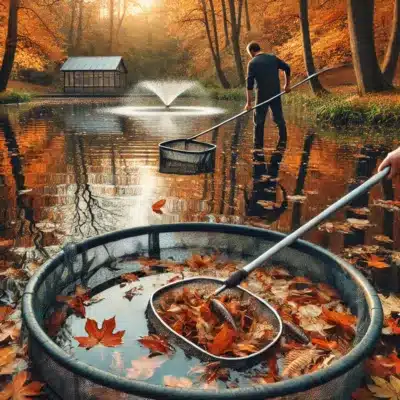 Autumn Pond Care[/caption]
Autumn is a transitional season when your main goal is to prepare your pond for winter. With cooler temperatures and falling leaves, it’s important to stay on top of seasonal pond care.
Leaf Removal
As trees begin to shed their leaves, they can fall into your pond and create a mess. If left unchecked, these leaves will decay and release harmful gases like ammonia and nitrites into the water. Regularly skim leaves using a pond net, and consider installing a net over the pond to prevent leaf buildup. This simple step is one of the most effective ways to keep your pond clean as winter approaches. This is a perfect time of year to get your pond professionally cleaned.
Reduce Feeding and Prepare Fish
As the water cools, your fish’s metabolism slows down. Begin reducing their feeding as autumn progresses, and once the water temperature consistently drops below 10°C (50°F), stop feeding altogether. Overfeeding during this time can cause uneaten food to decay and harm the water quality.
If you plan to introduce a pond heater for the winter months, now is the time to install it. This will prevent the pond surface from freezing over entirely, ensuring your fish have the proper gas exchange.
Trim Plants and Store Equipment
Prune aquatic plants, especially those that have overgrown during the summer. Thinning them out ensures your pond won’t be overwhelmed with decaying plant matter as the weather cools. Autumn is also the time to check your equipment one last time. If your pond pumps or filters aren’t freeze-resistant, now is the time to clean and store them before the cold weather sets in.
Winter Pond Care: Protecting Your Pond Through the Cold
[caption id="attachment_3410" align="aligncenter" width="400"]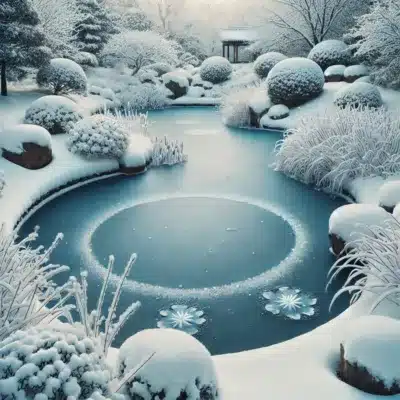 Winter Pond Care[/caption]
Winter is the quietest time for your pond, but it still requires some seasonal pond care to ensure everything survives until spring. The main concern during winter is preventing your pond from freezing over completely.
Prevent Freezing
A frozen pond surface can trap harmful gases and prevent oxygen from entering the water, which can be dangerous for your fish. Use a pond heater or de-icer to keep a small section of the pond ice-free, allowing for gas exchange.
Minimize Disturbance
Avoid disturbing the pond too much during winter, especially by walking on the ice. This can send shockwaves through the water and stress your fish. Simply monitor the pond and keep it free of ice.
Protect Equipment
If your pond has pumps or filters that aren’t designed to handle freezing temperatures, remove and store them in a safe place until spring. This will prevent damage and ensure they’re ready to go when the weather warms up again.
Pond Heating
Warming a pond doesn’t necessitate year-round warmth; stabilizing temperatures with pond heating during autumn, winter, and spring can greatly benefit koi health. Despite the challenges in selecting a koi pond heater, choosing the right system, such as electric element heaters like Elecro or energy-efficient Air Source Heat Pumps with the ability to cool water, can enhance the pond environment, extend hobby enjoyment into colder months, and prevent equipment failure due to freezing.
What to feed Koi in Winter?
As winter approaches and the temperatures drop, you may be wondering what to feed koi in winter to ensure their health and well-being. Koi have specific dietary needs during the colder months, and feeding them properly is essential for their survival. In this guide, we’ll cover the best food for koi in winter, feeding schedules, and overall winter koi care to help your fish thrive.
Conclusion: Embrace the Seasons and Keep Your Pond Thriving
Caring for your pond throughout the year doesn’t have to be a daunting task. By adjusting your approach based on the seasons and taking a proactive stance on maintenance, your pond will remain a vibrant and healthy feature of your garden all year long. From spring cleaning to winter protection, the key is consistent, thoughtful care. Your fish, plants, and the overall ecosystem will thrive, giving you the beauty and tranquility a well-maintained pond can offer.
Matthew Adlington


Comments
Post a Comment