The Ultimate Guide to Pond Filtration for Koi Health
A healthy koi pond relies on an effective filtration system, which is foundational to water quality, fish health, and overall pond aesthetics. In this guide, we’ll explore why pond filtration is essential for koi health, discuss the various types of filtration systems available, offer guidance on choosing the right system, and provide maintenance tips for optimal filtration performance.
Why Is Pond Filtration Crucial for Koi Health?
Pond filtration goes beyond keeping the water clear; it creates a balanced, oxygenated, and waste-free environment that koi need to thrive. As koi produce waste through respiration, digestion, and movement, the filtration system plays a vital role in managing the buildup of these waste products. Here’s why pond filtration is indispensable for koi:
- Waste Removal: Koi release ammonia through their gills and waste. If not filtered, ammonia can accumulate, becoming toxic to fish. Filtration systems help convert ammonia into less harmful substances.
- Algae Control: Excess nutrients can fuel algae blooms, which can cloud the water, deplete oxygen, and create unhealthy conditions. Effective filtration controls nutrient levels, keeping algae growth manageable.
- Disease Prevention: Stagnant, unfiltered water creates a breeding ground for bacteria and parasites, increasing the risk of disease outbreaks. Filtration promotes cleaner water, reducing the likelihood of infections.
- Enhanced Oxygen Levels: Filtration systems often include components like waterfalls or fountains that increase surface agitation, boosting oxygen levels that are essential for koi survival and bacterial health.
Types of Pond Filtration Systems: Which One Is Right for Your Koi Pond?
Pond filtration systems generally combine different methods to tackle various contaminants, but understanding the distinct roles of each type will help you build a comprehensive system.
1. Mechanical Filtration
Mechanical filtration is the first line of defense, designed to physically remove large particles like leaves, fish waste, and debris. The system typically includes:
- Filter Pads and Sponges: These trap visible debris and should be cleaned regularly to maintain water flow.
- Skimmers: Positioned on the water’s surface, skimmers capture leaves and floating debris, reducing the load on the main filter.
- Bottom Drains: These remove heavier debris that settles at the pond’s base, minimizing sediment buildup and preventing toxic gas formation.
By removing debris early, mechanical filtration reduces the workload on biological and chemical filters and keeps the pond visually clean.
2. Biological Filtration
Biological filtration is critical for koi ponds, as it utilizes beneficial bacteria to convert harmful ammonia into less toxic nitrite and, ultimately, nitrate. This process, known as the nitrogen cycle, helps maintain safe water conditions for koi.
- Bio Balls and Media: Biological filters often contain bio balls or other media with high surface areas where beneficial bacteria can colonize.
- Moving Bed Filters: These filters use media in constant motion to maximize bacteria growth, breaking down waste more efficiently.
- Bead Filters: Using tiny beads as media, these filters provide both biological and mechanical filtration, capturing fine particles and hosting bacteria.
For more information on maintaining a stable nitrogen cycle, see our Ammonia and Nitrite Management Guide.
3. Chemical Filtration
These removes specific toxins, odors, and unwanted compounds that can cloud the water and affect water quality.
- Activated Carbon: A popular choice for chemical filtration, activated carbon absorbs organic compounds, tannins, and odors, leaving the water clear and fresh.
- Zeolite and Phosphate Removers: Zeolite can remove ammonia directly, while phosphate removers target algae-fueling nutrients.
Chemical filters should be replaced as needed to maintain effectiveness. They are often used in conjunction with biological and mechanical systems to achieve balanced water quality.
4. UV Sterilizers
While not a filtration system in itself, a UV sterilizer adds an extra layer of protection by neutralizing free-floating algae, bacteria, and parasites using ultraviolet light.
- Algae Control: UV light disrupts algae cells, preventing their reproduction and reducing green water.
- Pathogen Reduction: UV sterilizers also kill harmful bacteria and parasites that may otherwise cause diseases in koi.
A UV sterilizer should be correctly sized based on your pond’s volume for maximum efficacy. Adding one to your filtration system can help maintain crystal-clear water.
[caption id="attachment_3727" align="aligncenter" width="400"]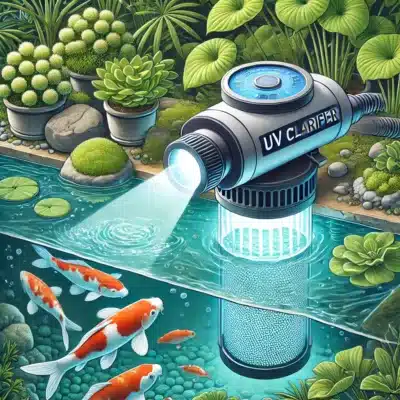 UV Clarifier in Koi Pond[/caption]
Choosing the Right Pond Filtration System: Key Factors to Consider
When selecting a filtration system, consider your pond’s unique characteristics, koi population, and maintenance goals. Here are key factors to guide your choice:
1. Pond Size and Volume
The size of your pond directly impacts the type and size of the filtration system you need. As a general rule, the filtration system should be able to process the entire pond volume at least once per hour.
2. Koi Stocking Density
A higher number of koi will produce more waste, requiring a more robust filtration system. For ponds with a high stocking density, consider adding additional biological filtration or a more powerful pump to handle the increased load.
3. Budget and Maintenance Preferences
Some systems require more frequent maintenance than others. If you prefer low-maintenance options, consider automated backwashing systems or bead filters with self-cleaning features. Budget-wise, a high-quality filter is a worthwhile investment, as koi ponds with poor filtration often require costly remediation down the line.
For more guidance on setting up your pond, visit our Pond Building Services page.
4. Location and Environmental Factors
If your pond is situated near trees or prone to leaf buildup, a skimmer is essential to capture falling debris. In areas with frequent algae blooms, adding a UV sterilizer or chemical filtration can help manage these conditions.
Top Filtration Systems for Koi Ponds: A Closer Look
Here are some recommended systems that combine efficiency with user-friendly maintenance features.
- Evolution Aqua Nexus Filters: Known for exceptional biological and mechanical filtration, the Nexus series supports the nitrogen cycle with highly effective bio media. Learn more about Nexus Filters.
- Oase Filtoclear Pressure Filters: Compact and versatile, these filters integrate a UV clarifier, making them ideal for maintaining clear water. They are also easy to backwash, reducing cleaning frequency.
- Aquaforte EconoBead Filters: These filters are cost-effective and come with self-cleaning functions, ideal for those looking for a low-maintenance option. See our selection here.
Maintenance Tips for a Pond Filtration System: Keeping It Effective Year-Round
Regular maintenance keeps your pond’s filtration system operating at peak performance. Here are key maintenance tasks to incorporate into your schedule:
Weekly Maintenance
- Clean Skimmers and Pre-Filters: Remove any leaves, twigs, or debris to prevent clogs.
- Monitor Water Quality: Regularly test ammonia, nitrite, nitrate, and pH levels to ensure safe conditions. For guidance, see our Water Hardness and pH Stability Guide.
Monthly Maintenance
- Backwash or Clean Filters: This task removes accumulated debris from the mechanical and biological filters, maintaining their efficiency.
- Inspect UV Bulbs: Ensure the bulb is functioning correctly, as it should be replaced annually to maintain algae control.
Seasonal Maintenance
- Deep Clean the Pond and Filter System: At the start of spring and end of autumn, give your system a thorough cleaning to prepare for seasonal changes.
- Winterize Equipment: If you live in a cold climate, consider removing or covering certain equipment to prevent damage.
For a complete guide to seasonal pond care, check out our Pond Care Guide.
[caption id="attachment_3728" align="aligncenter" width="400"] Biological Filtration in a Koi Pond[/caption]
Troubleshooting Common Pond Filtration Issues
Even well-maintained systems can encounter issues. Here’s how to troubleshoot common problems:
- Reduced Water Flow: Check for clogs in the skimmer, filter pads, or pump. Clean any blockages, and ensure there are no leaks in the tubing.
- Persistent Algae Growth: If your UV clarifier isn’t effective, it may need a new bulb. Consider adding floating plants to shade the water and reduce algae growth.
- Unpleasant Odors: These often indicate organic buildup in the filter or pond. Perform a deep clean of the system, and consider using activated carbon or beneficial bacteria treatments to improve water quality.
The Role of Plants in Supporting Filtration
Aquatic plants can enhance filtration by absorbing excess nutrients and providing shade. Consider adding oxygenating plants like hornwort, water lilies, or water hyacinth. They not only beautify the pond but also reduce algae growth by competing for nutrients.
For more plant options, explore our Best Plants for Koi Ponds Guide.
Final Thoughts: Investing in Quality Filtration for Long-Term Pond Health
An effective pond filtration system is one of the most valuable investments you can make in koi care. Not only does it support water quality and clarity, but it also promotes a safe and thriving environment for your fish. By choosing the right system, maintaining it regularly, and supplementing it with beneficial plants, you’re setting up your koi pond for long-term success and beauty.
For professional advice on filtration, installation, or maintenance, reach out to That Pond Guy for expert assistance.


Comments
Post a Comment